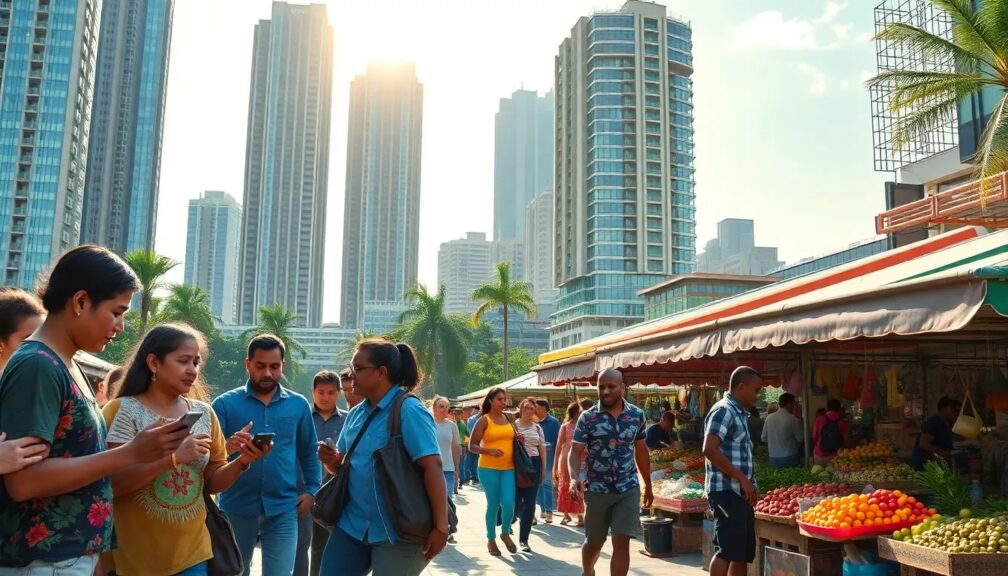
The current development of societies is intrinsically linked to the economic dynamics that sustain them. As nations face global challenges like inequality and sustainability, it becomes clear that the interaction between economy and social fabric is a determining factor for progress.
It's essential to analyze the impact of the economy and society on current development, as both elements not only influence economic growth but also affect people's quality of life. Understanding this relationship will help identify effective strategies to promote more equitable and sustainable development.
- Impact of the economy on current social development
- Relationship between economy and well-being in contemporary society
- Effects of the global economy on local communities
- Economic inequality and its impact on social development
- Economic transformations and their influence on social cohesion
- Sustainable development: intersection between economy and society
- Frequently asked questions about the impact of the economy and society on current development
The impact of the economy on current social development manifests through various dimensions that affect people's daily lives. For example, job creation not only provides income but also strengthens social cohesion. A dynamic economy can contribute to:
- Increasing access to education and health.
- Improving community infrastructure.
- Encouraging citizen participation in decision-making processes.
The economy influences the distribution of resources, which in turn affects the quality of life of different social groups. Economic policies that prioritize social inclusion can help reduce the gap between rich and poor. In this sense, it's essential to consider how economic decisions directly impact:
- Equity in income distribution.
- Access to job opportunities.
- Social mobility.
The economy also plays a crucial role in the sustainability of social development. Implementing responsible economic practices can promote an environment where social well-being and environmental care are prioritized. This includes:
- Promoting circular economies.
- Encourage the use of renewable energies.
- Support fair trade.
It's important to highlight that economic crises can have devastating repercussions on the social fabric. During periods of recession, there is an increase in poverty and social exclusion, which underscores the need for policies that not only seek economic growth but also promote comprehensive social development. The decisions made today will determine the future state of our societies.
Relationship between economy and well-being in contemporary society
The relationship between economy and well-being in contemporary society is a fundamental aspect to understand how community development is structured. A healthy economy not only generates wealth but also allows for more equitable access to essential services like education and health. This translates into a direct improvement in the quality of life for citizens, establishing a virtuous circle where economic growth drives social well-being.
Well-being is influenced by the level of employment and job stability. When people have decent and stable jobs, their capacity for consumption and savings increases, which in turn fosters investment in the community. This is manifested through:
- Improvements in local infrastructure.
- An increase in investment in education.
- A strengthening of public health services.
Economic inequality can generate social tensions that affect overall well-being. The perception of injustice in resource distribution causes discontent and can lead to conflicts. It is crucial to implement policies that address this issue, focusing on:
- Income redistribution programs.
- Training and professional development opportunities.
- Initiatives that promote financial inclusion.
In an increasingly interconnected world, economic sustainability has become imperative. Economic decisions must consider their impact on the environment and the well-being of future generations. Promoting responsible and sustainable practices not only benefits the economy but also ensures a healthier and more equitable environment for all.
Effects of the global economy on local communities
The effects of the global economy on local communities are significant and multifaceted. The dynamics of international trade can influence local production, affecting the availability of products and services. Additionally, multinational companies often establish operations in developing countries, which can create both opportunities and challenges. Among the main effects are:
- Job creation, although often with low wages.
- Displacement of small local businesses.
- Increased economic dependence on external markets.
The global economy can exacerbate inequality within communities. Trade liberalization policies, by favoring large corporations, can exclude small producers. This leads to segments of the population being at a disadvantage, which translates into:
- Limited access to economic resources.
- Inequality in job opportunities.
- Deterioration of quality of life in vulnerable communities.
The interconnection of economies globally can also facilitate the exchange of ideas and technologies, which in turn can benefit local communities. The spread of sustainable practices and innovation can strengthen communities' ability to face challenges. Benefits include:
- Access to clean technologies.
- Community development initiatives.
- Collaborations that promote local empowerment.
It's crucial to consider the impact of global economic crises on local communities. During these crises, many communities face cuts in essential services and a sudden loss of jobs. Community resilience is key to mitigating these effects, and this can be achieved through:
- Social support programs.
- Local employment initiatives.
- Promotion of community solidarity networks.
Economic inequality poses a significant challenge to social development, affecting the cohesion and stability of communities. When resources are concentrated in the hands of a few, the majority's access to opportunities like education and employment is limited, perpetuating a cycle of poverty. This situation can lead to:
- Increased violence and crime.
- Distrust in public institutions.
- Inequalities in health and well-being.
Economic inequality influences civic participation, as lower-income individuals often feel excluded from decision-making processes. This lack of representation can generate disillusionment with the democratic system, weakening the social fabric. It's essential to work on policies that promote:
- Social and economic inclusion.
- Equitable access to basic services.
- Community empowerment programs.
The relationship between economic inequality and social development also shows up in social mobility. In societies where opportunities are limited, the chances for social advancement are scarce, which not only affects individuals' futures but also the growth potential of society as a whole. Therefore, it's vital to implement strategies that promote:
- Quality education accessible to everyone.
- Job training and skills development.
- Creating support and mentorship networks.
Addressing economic inequality is essential for achieving sustainable social development. Policies aimed at redistributing wealth and providing equal opportunities not only improve people's quality of life but also strengthen community resilience against economic and social crises. Investing in everyone's well-being is ultimately an investment in the future of society.
Economic transformations, driven by globalization and digitalization, have reconfigured labor and consumption structures, affecting social cohesion. The emergence of new industries and automation has displaced traditional jobs, creating an urgent need for training and adaptation. This changing environment can lead to social tensions if appropriate policies are not implemented to facilitate the transition and promote worker inclusion in the new economic landscape.
Wealth distribution inequality has deepened due to economic transformations. Regions and sectors benefiting from these innovations become more prosperous, while others lag behind. This disparity can undermine social cohesion, as affected communities tend to experience increased frustration and distrust towards institutions. It's essential to tackle this challenge through initiatives that seek to:
- Encourage investment in education and vocational training.
- Implement income redistribution policies.
- Promote inclusive economic development across all regions.
The digital economy, while offering opportunities, can also exacerbate social divisions. The lack of access to advanced technologies and quality internet limits opportunities for many communities, perpetuating inequality. To ensure effective social cohesion, it's vital to establish programs that guarantee:
- Universal access to technology.
- Digital literacy for all ages.
- Support for entrepreneurs in disadvantaged environments.
The challenge of balancing economic growth with social cohesion is fundamental for sustainable development. Collaboration among governments, businesses, and communities is key to creating an environment where all citizens feel included and valued. By prioritizing equity in the distribution of opportunities, a more cohesive and resilient society can be fostered in the face of future economic challenges.
Sustainable development: intersection between economy and society
Sustainable development emerges as a key approach to understanding the intersection between economy and society. This model seeks to meet present needs without compromising the ability of future generations to meet their own. In this context, it's crucial to promote policies that integrate both economic growth and social well-being, ensuring that the benefits of development are distributed equitably. Some essential aspects to consider are:
- Equity in access to resources and opportunities.
- Preservation of the environment for future generations.
- The active participation of communities in policy development.
In the pursuit of sustainable development, it's essential to promote economic practices that value social capital. This means recognizing the value of human relationships and social cohesion as drivers of growth. Communities that work together to achieve common goals are more resilient to economic challenges. To encourage this dynamic, initiatives should be implemented that:
- Strengthen the community fabric.
- Promote cooperation and solidarity.
- Encourage the development of interpersonal and social skills.
Economic sustainability means adopting a long-term approach that considers the social and environmental consequences of economic decisions. By integrating sustainability criteria into their strategies, businesses can create a positive impact on the community, contributing to more comprehensive development. This can be achieved through:
- The implementation of ethical business practices.
- Support for corporate social responsibility initiatives.
- Investment in clean and sustainable technologies.
Sustainable development requires a joint commitment between governments, the private sector, and civil society. Collaboration is key to creating an environment where the economy and social well-being reinforce each other. By working towards a shared vision, we can build a fairer, more equitable, and sustainable future for all.
Frequently asked questions about the impact of the economy and society on current development
What is the impact of economic development on society?
Economic development has a profound impact on society, as it influences people's quality of life and social cohesion. Sustained growth can lead to job creation, poverty reduction, and access to basic services. However, it can also generate challenges, such as increased inequality and environmental degradation.
- Job increase: Economic expansion generally creates more job opportunities.
- Improvement in services: Economic growth can allow for investments in education, health, and infrastructure.
- Inequality: Development can disproportionately benefit certain groups, widening the social gap.
What is the impact of economic growth on society?
Economic growth has a significant impact on society, as it can improve the quality of life for citizens. As the economy grows, more jobs are created and incomes increase, allowing families to access better health, education, and housing services. This cycle of improvement can contribute to a more equitable and prosperous society.
However, economic growth can also bring social challenges. Among them are:
- Increase in inequality: Not all sectors benefit equally from growth.
- Displacement of communities: The expansion of industries can lead to the relocation of populations.
- Environmental degradation: Rapid growth can compromise the sustainability of the environment.
Therefore, it's essential that economic policies consider not just growth, but also social well-being and environmental protection to achieve balanced and sustainable development.
How does the economy influence our society?
The economy influences our society in multiple ways, affecting aspects like living standards, education, and health. Sustained economic growth can improve citizens' quality of life, while a recession can lead to increased poverty and unemployment. Among the ways the economy impacts society, we highlight:
- Household income: Increases purchasing power and access to goods and services.
- Job opportunities: Creates employment and fosters professional development.
- Investment in public services: Improves infrastructure and healthcare.
Additionally, the economy also shapes social relationships and community cohesion. Economic inequalities can provoke tensions and conflicts, while an equitable distribution of wealth fosters inclusion and solidarity. Among the social effects of the economy, we find:
- inequality: Affects access to resources and opportunities.
- Social mobility: Determines people's ability to improve their economic situation.
- Civic participation: Influences citizens' involvement in political and social decisions.
What impact does the social economy have?
The social economy has a significant impact on job creation, as it promotes the development of cooperatives and non-profit organizations that generate job opportunities in vulnerable communities. These business models prioritize the well-being of their members and the community, contributing to a more inclusive and sustainable work environment.
Moreover, the social economy promotes social cohesion by facilitating active citizen participation in economic decision-making. This translates into greater equity in resource distribution and strengthens solidarity among social groups. Collaboration and networking are essential for the success of these initiatives, which in turn reinforces the social fabric.
Finally, the social economy contributes to sustainable development by integrating responsible practices that respect the environment. Companies in this sector often adopt business models that minimize their ecological impact and promote the use of local resources. This not only improves the quality of life in communities but also favors a more sustainable future for the next generations.


Leave a Reply